An electric air taxi passes its hardest test. When can passengers fly?
A British start-up recently pulled off a key maneuver for electric vertical flight—but certification, infrastructure and demand will decide whether air taxis fill our skies
Deni Ellis Béchard is Scientific American’s senior writer for technology. He is author of 10 books and has received a Commonwealth Writers’ Prize, a Midwest Book Award and a Nautilus Book Award for investigative journalism. He holds two master’s degrees in literature, as well as a master’s degree in biology from Harvard University. His most recent novel, We Are Dreams in the Eternal Machine, explores the ways that artificial intelligence could transform humanity. You can follow him on X, Instagram and Bluesky @denibechard

An electric air taxi passes its hardest test. When can passengers fly?
A British start-up recently pulled off a key maneuver for electric vertical flight—but certification, infrastructure and demand will decide whether air taxis fill our skies

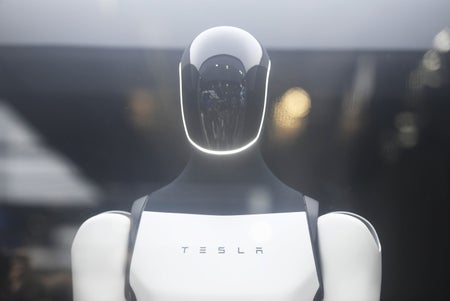
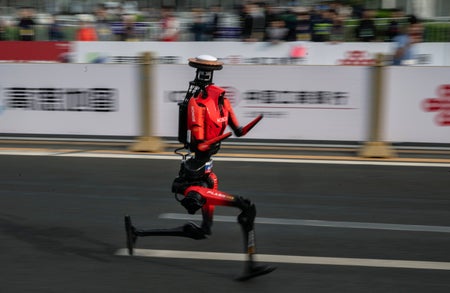
A robot ran a half marathon faster than a human. Here’s why folding laundry is still harder
A premapped course, a crew of handlers and a world-beating time: here’s what this Beijing half marathon reveals about how far humanoid robots have come—and how far they haven’t

Is the ‘Ghost Murmur’ quantum device possible? Scientists are skeptical
Ghost Murmur was described as a futuristic CIA tool that could detect a heartbeat from vast distances. Physicists say the public story clashes with the basic limits of magnetic sensing

Do robots have a race problem? Not all scholars agree
As humanoid robots enter the real world, new studies suggest that people project human racial biases onto them—but the research is divided on whether those biases persist outside the lab and in real-world interactions

WTF, Anthropic’s Claude Code keeps track of every time you swear
Code that reads your frustration is the least interesting part of the story of this accidental leak from Anthropic. The leak reveals how AI tools are also concealing their own role in the work they help produce

What the Meta and Google verdict means for your social media feed
A Los Angeles jury found Instagram and YouTube negligent in how they were built, opening a new legal fight over how courts view social media

Human neurons on a chip learned to play Doom
Cortical Labs says the stunt points toward a new kind of low-power computing—and perhaps a new way to study neurological drugs

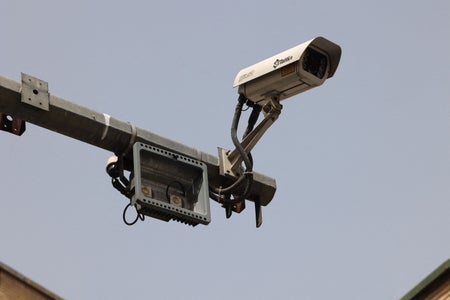
The hacked cameras behind the wave of assassinations in Iran
Security feeds and traffic cameras have helped guide some of the most audacious targeted killings in modern history. Security researchers say the underlying vulnerabilities cover the planet and are easy to exploit

Open-source software has an invisible vulnerability. Hackers have found it
A cybercrime campaign called GlassWorm is hiding malware in invisible characters and spreading it through software that millions of developers rely on

The AI boom is dangerously dependent on helium
The closure of the Strait of Hormuz has trapped a third of the world’s commercial helium, threatening the irreplaceable coolant that makes MRI scanners and advanced microchips possible

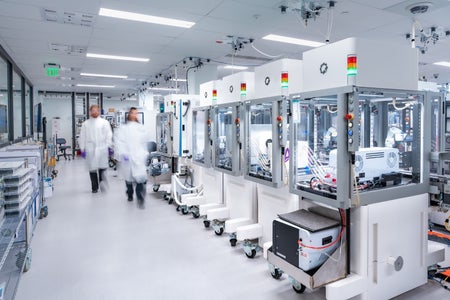
AI-designed experiments run by robots hint at a new approach to biology
Researchers at OpenAI and Ginkgo Bioworks showed that an AI model working with an autonomous lab can design and iterate real biology experiments at unprecedented speed

Why ships in the Strait of Hormuz can’t trust their navigation screens
GPS spoofing is distorting vessel positions and deepening the risk in one of the world’s most important shipping lanes

This musician built an AI clone of her voice so anyone can sing as her
Experimental composer Holly Herndon says this technology isn’t here to replace artists—and that the future of creativity belongs to collective intelligence

He built the ultimate test for humanoid robots, and they beat it in months
Roboticist Benjie Holson created the “Humanoid Olympic Games” thinking home robots were 15 years away. Then they started folding the laundry

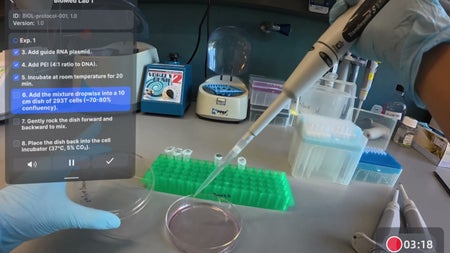
AI-powered smart goggles are helping novice scientists perform like experts
A new wearable AI system watches your hands through smart glasses, guiding experiments and stopping mistakes before they happen

Poetry was humanity’s first language technology. AI is the next
Sasha Stiles turned GPT-2 experiments into a self-writing poem at a Museum of Modern Art installation—and a new way to think about text-generating AI optimization

How Anthropic’s safety-first ethos collided with the Pentagon
As Anthropic releases its most autonomous agents yet, a mounting clash with the military reveals the impossible choice between global scaling and a “safety first” ethos

The chemist who taught AI to run the lab
Gabriel Gomes built an agent that turns plain English into physical experiments, enabling research that humans alone could never sustain

This civil rights lawyer uses AI to battle the FBI
Joseph McMullen uses AI to sort through terabytes of evidence, freeing him to focus on what the machines can’t find: the human story

The AI scribe that lets doctors stop typing and start listening
When a patient shared the story of her sister’s death, an AI captured the clinical details—freeing physician Christopher Sharp to just be present

After teaching for 30 years, Jen Roberts has found an unlikely ally in AI
Veteran teacher Jen Roberts explains why generative tools are more than just a platform for cheating—they’re a way to make classrooms fairer and more human

She asked a robot about race. The answer scared her
Transdisciplinary artist Stephanie Dinkins challenges us to rethink what we feed our machines—and asks what AI might become if it were trained on care

How antidrone lasers work—and why flights stopped over El Paso
Sources say an Army antidrone laser near Fort Bliss prompted a brief FAA airspace closure—spotlighting the hazards of battlefield technology in civilian skies

Spiders taught scientists how to make unsinkable metal
Researchers mimicked the air-trapping tricks of diving bell spiders to create aluminum that stays afloat—even when punctured