New Issue: Orbital Catastrophe Ahead? Read Now

World has entered an era of ‘global water bankruptcy,’ U.N. warns

Humans are using more water than Earth can support, with many water sources already damaged beyond repair, a report from the United Nations found

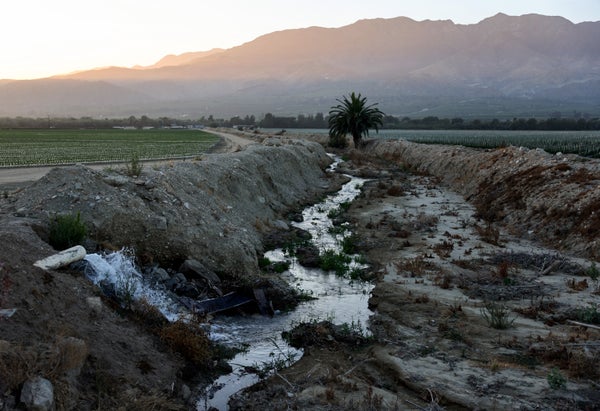
drought ditch with light sunlight in background

An irrigation ditch carries a light flow of water along agricultural fields amid drought conditions in June 2022 near Fillmore, Calif.

Mario Tama/Getty Images

Join Our Community of Science Lovers!

Humans use more water than the planet can support, entering an era of “global water bankruptcy,” a new report from the United Nations warns. Almost 75 percent of the world’s population now lives in countries that are experiencing significant water insecurity, according to the report.

Rivers, lakes, wetlands and other water sources are already “damaged beyond realistic prospects of full recovery,” the report states.

The report compares the situation to a bank account going into the red: humans are using more water than our planet can produce and using more water that is stored in sources such as glaciers, wetlands and aquifers.


On supporting science journalism

If you're enjoying this article, consider supporting our award-winning journalism by subscribing. By purchasing a subscription you are helping to ensure the future of impactful stories about the discoveries and ideas shaping our world today.


The impacts extend beyond drinking water, the report states. Kaveh Madani, director of the United Nations University Institute for Water, Environment and Health and author of the report, said at a press briefing on Tuesday that a functioning water system helps prevent biodiversity loss, fights climate change and supports national security.

“If you invest in water, you’re investing in everything else,” Madani said.

The report stresses that countries must take immediate action to put more sustainable water systems in place. “Recognizing this post-crisis reality is not an act of resignation,” the report states. It is a “starting point” to safeguard water “before the remaining natural capital is lost.”

Jackie Flynn Mogensen is a breaking news reporter at Scientific American. Before joining SciAm, she was a science reporter at Mother Jones, where she received a National Academies Eric and Wendy Schmidt Award for Excellence in Science Communications in 2024. Mogensen holds a master’s degree in environmental communication and a bachelor’s degree in earth sciences from Stanford University. She is based in New York City.

More by Jackie Flynn Mogensen

Subscribe to Support Independent Journalism

Great science journalism requires human expertise, time, effort and creativity. And it costs money. That’s why I and the journalists here at Scientific American hope you’ll join our community.

When you subscribe, you are supporting staff and freelance journalists who are passionate about telling science stories that are true, important and compelling. Our editors and reporters are often experts in their fields, which means they understand the nuances of big discoveries and can untangle the breakthroughs from the hype. With a subscription, you are also supporting rigorous fact-checking to ensure the words we publish are precise and accurate. And you’re supporting original illustrations, graphics and photos that bring you closer to an advanced laboratory, an ice sheet in Antarctica or a space mission in orbit. You’re helping us craft other types of high-quality journalism as well: Our newsletters are carefully written, edited and curated by staffers you have or will come to know and love. Our Science Quickly podcast is based on original reporting, collaboration with editors and scientists and exacting production.

Subscriptions keep this engine running so we can continue to deliver thoughtful, rigorous and independent science journalism to you. In an era of viral misinformation, this work is crucial. If you value what we do, I hope you’ll consider joining us as a subscriber

Thank you,

Jeanna Bryner, Editor in Chief, Scientific American

Subscribe