
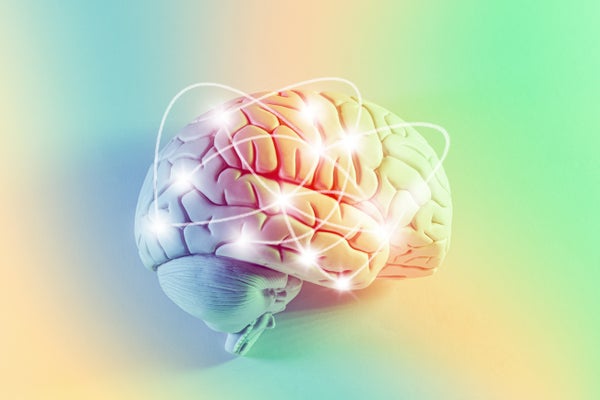
We all know the power of music to make us feel better when stressed. But this relaxing effect goes much deeper than our mood: music changes our brain, reorienting our neural pathways and altering our physiology along the way.
This power, it seems, is particular to music over other soothing sounds, such as nature sounds, according to a new study. Music calms our heart rate, lowers our skin conductivity and gets our cortisol levels—the stress hormone—in check.
“After a stressful experience, the brain can remain in a state of high alert,” says Yi Du, a researcher at the Chinese Institute of Sciences, Beijing and senior author of the new study. “Nature sounds may provide a calming background, but music also takes the brain on an organized journey—tension builds, expectations develop and the tension is eventually resolved.”
On supporting science journalism
If you're enjoying this article, consider supporting our award-winning journalism by subscribing. By purchasing a subscription you are helping to ensure the future of impactful stories about the discoveries and ideas shaping our world today.
To tease out music’s singular neural effects, Du and her colleagues conducted a series of experiments. First, a group of 30 participants were asked to listen to music and another 30 to water sounds in nature before and after performing a task designed to stress them out: mental math exercises.
The researchers measured the participants’ stress responses, including their heart rate and salivary cortisol levels, before and after the test. Those who listened to music recovered from stress faster.
In a second experiment involving a different group of participants who underwent brain scanning using functional magnetic resonance imaging, or fMRI, the researchers found that listening to music, not natural sounds, strengthened specific neuronal pathways.
“Music altered communication between [brain] regions that process sound and regions involved in regulating stress and arousal,” Du says. “Put simply, music does more than mask stress or distract us from it—it gives the brain a structured path back toward a calmer state.”
Du says more work is needed to fully understand how music soothes a stressed brain.
“We studied healthy young adults experiencing short-term stress…[which] may not apply directly to clinical populations or to chronic stress in everyday life,” she says. “We also used music selected by the researchers, whereas personally preferred music might produce different effects.”
Still, the study helps to explain previous research that has examined the connection between music and physiological and psychological stress responses. The findings were published on Monday in PNAS.