
George A.Bubenik, a physiologist and professor of zoology at the University of Guelph in Ontario, explains.
Imagine swimming in a lake on a hot summer day. The water is quite warm, but the wind is strong and the moment you leave the water you feel chilly and get "goosebumps." So you change clothes and move inside to warm up. You make a nice cup of tea, get under a blanket and switch on the radio. Suddenly, you hear a song from a long time ago, the song your grandmother used to sing to you when you were a child. Again, you feel a chill on your back and again, you get goosebumps. Why do such seemingly unrelated events elicit the same body reaction? The reason for this is the physiology of emotions.
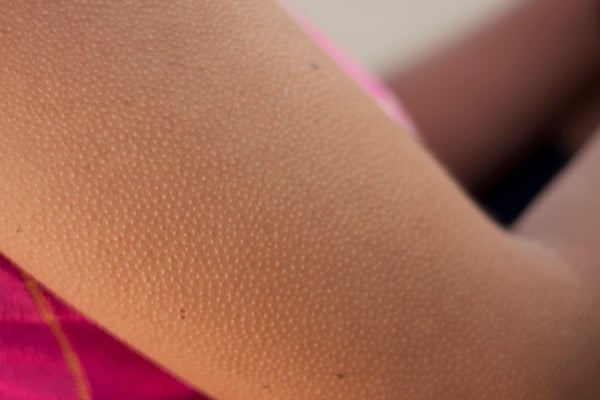
Goosebumps are a physiological phenomenon inherited from our animal ancestors, which was useful to them but are not of much help to us. Goosebumps are tiny elevations of the skin that resemble the skin of poultry after the feathers have been plucked. (Therefore we could as well call them "turkeybumps" or "duckbumps.") These bumps are caused by a contraction of miniature muscles that are attached to each hair. Each contracting muscle creates a shallow depression on the skin surface, which causes the surrounding area to protrude. The contraction also causes the hair to stand up whenever the body feels cold. In animals with a thick hair coat this rising of hair expands the layer of air that serves as insulation. The thicker the hair layer, the more heat is retained. In people this reaction is useless because we do not have a hair coat, but goosebumps persist nevertheless.
On supporting science journalism
If you're enjoying this article, consider supporting our award-winning journalism by subscribing. By purchasing a subscription you are helping to ensure the future of impactful stories about the discoveries and ideas shaping our world today.
In addition to cold, the hair will also stand up in many animals when they feel threatened--in a cat being attacked by a dog, for example. The elevated hair, together with the arched back and the sideward position the animal often assumes, makes the cat appear bigger in an attempt to make the dog back off. People also tend to experience goosebumps during emotional situations, such as walking down the aisle during their wedding, standing on a podium and listening to a national anthem after winning in sports, or even just watching horror movies on television. Quite often a person may get goosebumps many years after a significant event, just by thinking about the emotions she once experienced, perhaps while listening to the romantic song to which she danced many years ago with the love of her life.
The reason for all these responses is the subconscious release of a stress hormone called adrenaline. Adrenaline, which in humans is produced in two small beanlike glands that sit atop the kidneys, not only causes the contraction of skin muscles but also influences many other body reactions. In animals, this hormone is released when the animal is cold or facing a stressful situation, preparing the animal for flight-or-fight reaction. In humans, adrenaline is often released when we feel cold or afraid, but also if we are under stress and feel strong emotions, such as anger or excitement. Other signs of adrenaline release include tears, sweaty palms, trembling hands, an increase in blood pressure, a racing heart or the feeling of 'butterflies' in the stomach.