
If the truth is out there, the White House has a new scientific advisory group working on finding it. Called the UAP Science Advisory Council, the group’s members aim to advise the highest echelons of the U.S. government on unidentified aerial phenomena (UAP). And they hope the findings will be published by prestigious science journals.
The UAP Science Advisory Council was founded after Avi Loeb, a professor at Harvard University who has spent years dedicated to the search for extraterrestrial intelligence, received a visit from a representative of the Office of the Director of National Intelligence.
“They had me at hello,” says Loeb, who also leads the Galileo Project, an initiative searching for alien civilizations.
On supporting science journalism
If you're enjoying this article, consider supporting our award-winning journalism by subscribing. By purchasing a subscription you are helping to ensure the future of impactful stories about the discoveries and ideas shaping our world today.
The group’s formation is an indication of how the investigation of UAPs and the possibility of contact with intelligent alien life has gained acceptance in mainstream culture—and the halls of power.
On Thursday last week, Loeb and several other members of the new advisory body were among the speakers at the Disclosure Forum, an all-day event held in the Senate’s office building in Washington, D.C. Several members of Congress also attended, with the discussion centered on the national security, economic, religious and social implications of confirming that UAPs are alien or even extra-dimensional in origin.
Loeb stresses that the council, which does not have a budget outside of some reimbursement for travel expenses for members, is not intended to be an echo chamber. Indeed, Michael Shermer, a prominent UAP skeptic, is one of its members. Shermer, who founded Skeptic magazine, says he will keep the other members grounded and focused on examining UAPs through the lens of established scientific consensus.
“Pretty much everyone on the committee is more open to the possibility that UAPs could represent something other than ordinary terrestrial phenomena,” Shermer says. “Not just space aliens, by the way, but space-time bubbles and multi-dimensional beings and far future human time travelers.”
“None of that is going to pan out, because that’s just so unlikely or impossible by the laws of physics that I wouldn’t even bother doing down that road,” he adds.
Loeb says that a major goal is to make the council’s conclusions accessible to the public. In the immediate, that means publishing any findings on the council’s soon-to-launch website, he says, but it would also include seeking publication for their results in peer-reviewed journals.
“It should become part of scientific deliberation,” he says. “The point is, there is so much unsubstantiated claims in the public domain that are not scientific, that are not worth pursuing. I’m saying that there might be some diamonds in the rough that we will find very useful for science.”
Among those diamonds could be practical advice for what to do if we ever make contact with extraterrestrials. One of the group’s members is Los Angeles-based psychologist Jennice Vilhauer. Her role, she says, will be to study how people who claim to have interacted with UAPs were affected by the experience.
“There’s a tremendous amount of data that goes into what people are reporting, how that gets reported, what happens to them after it gets recorded, so we’re looking at all of that,” she says. “How people are being treated, how clinicians interact with people who engage with UAPs. That’s an enormous problem right now in the military. We know that only about 5 percent of people are actually reporting what they are actually seeing, because they’re afraid of stigma.”
Making UAP discourse more acceptable among the larger scientific community is, however, a side goal. The council’s primary responsibility is to report its findings to the Office of the Director of National Intelligence, as well as a board comprised of representatives from the Pentagon’s All-domain Anomaly Resolution Office (AARO), the White House, the FBI and other intelligence community agencies. The specific members of the board are being kept a secret, Loeb says.
“Some of them are government employees that are doing classified work, so they don’t want to be exposed,” he says. “It’s only the council that is open.”
Even some of the advisory group’s own members are seemingly not privy to the identities of those sitting on the board. Shermer speculates that vocal UAP enthusiast Rep. Anna Paulina Luna (R-FL) may be among them, but he adds that some members are likely more concerned with possible human origins of UAPs.
“If they did pose a security threat, then that would be of interest to the government, and that’s why they’re concerned,” he says. “I think most people in government don’t think it’s aliens.”
Loeb did say that he believes President Donald Trump isn’t on the board, adding that he has not met the president and has no imminent plans to do so. The group’s formation comes after Trump promised to release government records on UAPs to the public—at least some of which have since been made available on a Pentagon website.
“I don’t think right now he’s directly involved, but people report to him,” Loeb says, referring to the president.
Also appearing at Thursday's Disclosure Forum, Sen. Mike Rounds (R-SD) praised the Trump administration’s transparency on UAPs. However, when asked if Loeb’s advisory council will work with the legislative branch, Rounds demured. “I honestly don’t know,” he says.
As it stands, the council will not have access to any classified UAP material, and will instead focus its work on archival materials, such as those contained in the recent Pentagon releases. Given the obvious challenge of reverse-engineering possible alien technology from videos, photos and eye-witness accounts, council member and U.S. Navy veteran Timothy Gallaudet says the group’s work will be limited.
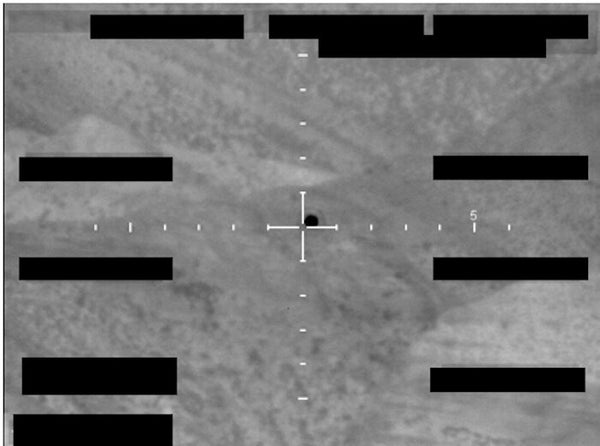
Pointing to a recent tranche of videos released by the Pentagon, Gallaudet says the council will try to determine the velocities and rates of movement of UAPs, in order to better understand their nature.
“Our job is just to research the phenomenon and make recommendations for further scientific study,” he says. Still, given the inherently mysterious nature of UAPs, Gallaudet didn’t rule out potential blockbuster breakthroughs as a result of the council’s work.
“We might be learning some fundamental new science principles or results by studying these phenomena,” he says.