
The last week of July 2026 is a meteor shower lover’s dream. Not one but two meteor showers are set to peak, one after the other, from July 28 to July 31.
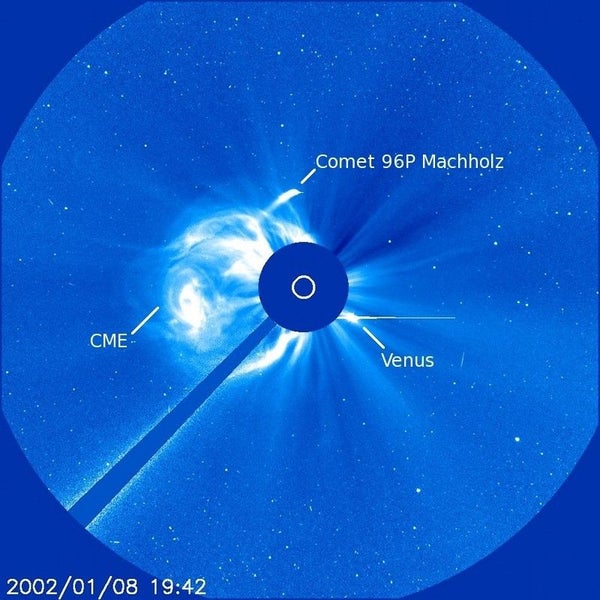
First up are the Southern Delta Aquariids. This display is actually something of a mystery: Meteors are the dazzling product of Earth passing through trails of debris that come from comets and asteroids. But scientists don’t know which space rock the Southern Delta Aquariids originate from, unlike most showers. The suspected culprit is Comet 96P Machholz, according to NASA.
The Southern Delta Aquariids get their name from the constellation Aquarius, from which they seem to appear in the sky. They’re typically faint, which means you can best spot them on a moonless night in the hours before dawn.
On supporting science journalism
If you're enjoying this article, consider supporting our award-winning journalism by subscribing. By purchasing a subscription you are helping to ensure the future of impactful stories about the discoveries and ideas shaping our world today.
This year the peak—the time when sky-gazers can expect the most meteors per minute—falls on July 28 and July 29. It could be possible to see 15 meteors or so an hour during this period, although the moon will be waxing gibbous, meaning they could be obscured somewhat by its light.
For the best chance of viewing the shower, head somewhere safe and dark outside and be prepared to spend a long time gazing at the sky. The Southern Delta Aquariids are best viewed in the Southern Hemisphere or along southern latitudes of the Northern Hemisphere.
NASA advises that you lie flat on your back and look about halfway between the horizon and the middle of the sky above you and 45 degrees from Aquarius. Give yourself about 30 minutes for your eyes to adapt to the dark.
And if you don’t catch these meteors, never fear. You have more chances to see shooting stars at the peak of the Alpha Capricornids on July 30 and July 31.
The Alpha Capricornids are famous for their slow, bright, colorful fireballs. So although there are fewer meteors an hour during this shower, the luminous nature of the ones that do fall makes up for it.
These meteors appear to originate in the constellation Capricornus, but they are actually the product of debris from Comet 169P/NEAT. This shower should be visible from both hemispheres.
Just as with viewing the Southern Delta Aquariids, sky-gazers should venture somewhere dark and safe in the hours before dawn and look up at the night sky for a chance of spotting one of these blistering space rocks as they fall.