
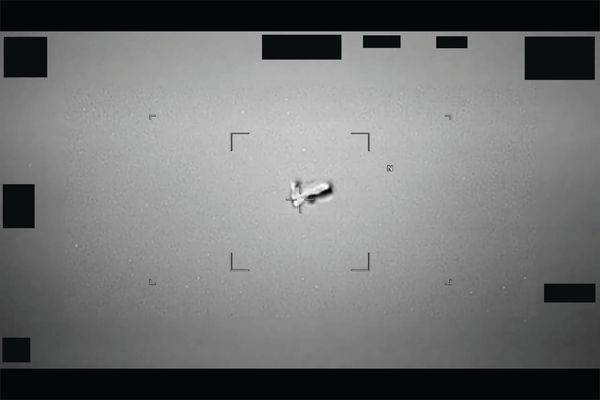
The truth may be out there, but Americans are split on what the truth is: just under half of people believe all sightings of unidentified flying object (UFO), also known as unidentified anomalous phenomena (UAP), can be explained by human activity or natural phenomena, a new Gallup poll finds.
The proportion of skeptics has been dropping, however: In 2019, 60 percent of Americans said they believed UAP were either human-caused or natural phenomena. But that proportion shrank to 50 percent in 2021 and now sits at 49 percent.
That’s not to say that all those with shifting opinions are sure our planet has been visited by intelligent life from other planets: 37 percent of the poll’s respondents said some UAP were likely alien spacecraft, down from 41 percent in 2021. Rather the number of people who aren’t sure has grown, from 7 percent in 2019 to 13 percent in 2026.
On supporting science journalism
If you're enjoying this article, consider supporting our award-winning journalism by subscribing. By purchasing a subscription you are helping to ensure the future of impactful stories about the discoveries and ideas shaping our world today.
There is one thing most Americans seem to agree on, though: more of them now believe the government is withholding information about UFOs, or UAP, than they did 30 years ago. In the new poll, some 78 percent said they believe officials know more than they tell the public compared with 71 percent in 1996.
The poll showed that young people between age 18 and 29 tend to be the most skeptical of UAP, with 58 percent of them saying there’s a human or natural explanation for all sightings. Meanwhile those between age 30 and 49 were found to be the most likely to believe in alien spacecraft, with 41 percent of this group attributing at least some sightings to such craft.
A lack of belief in alien visitations seems to be a bipartisan issue. About 53 percent of Democrats said they believe all UAP have nonalien explanations compared with 49 percent and 47 percent for Independents and Republicans, respectively.
Over the past few months, the Pentagon has released a number of documents regarding UFOs, which are now officially designated UAP. But in the poll, just 17 percent of Americans said they’ve personally seen something they believe could be classified as one.