
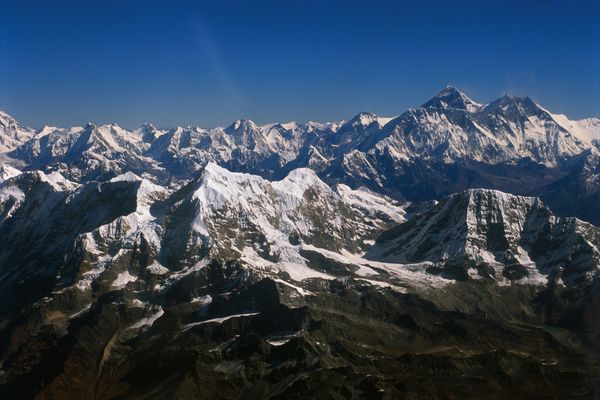
Rescue operations and clean-up crews are still working in the wake of last week’s devastating debris avalanche and floods in Nepal and Tibet. Researchers believe the catastrophe, which has so far killed more than 1,000 people, was triggered by a massive landslide high in the Himalayan mountains. Many questions remain about the role of climate change in this disaster. But as the first analyses begin, experts are also looking ahead to the potential effects of a looming super El Niño that could supercharge warming in the region.
Rising global temperatures have made high-mountain areas across the globe more unstable—and the risks of cataclysmic events have increased. Now, in addition to decades of global warming, this year is expected to see one of the strongest El Niño events ever recorded. The climate event could have unpredictable effects on Nepal, Tibet and the Himalayas, experts say. Here’s what’s at stake.
How El Niño affects the Himalayas
On supporting science journalism
If you're enjoying this article, consider supporting our award-winning journalism by subscribing. By purchasing a subscription you are helping to ensure the future of impactful stories about the discoveries and ideas shaping our world today.
El Niño and La Niña are cyclic climate patterns that together influence weather across the planet. El Niño years are defined by hotter than normal ocean temperatures in the central and eastern Pacific, while La Niña years are the opposite, with a cooling of ocean temperatures in the region. Typically, an El Niño peaks around December.
El Niño causes many largely predictable problems, depending on where you are on the planet, says Kaustubh Thirumalai, an associate professor in the department of geosciences at the University of Arizona. For example, El Niño is associated with mass coral bleaching in the tropics, wildfires in Indonesia and heavy rainfall in parts of South America.
But in regions like the Himalayas, Thirumalai says, El Niño “makes things more unpredictable.”
In this part of the world, a classic El Niño means warmer than usual air temperatures in the summer following its peak, as well as a drier monsoon season, Thirumalai says.
“When you look at average El Niño events over the observed record over the last 50 years, typically El Niño brings warmer than normal temperatures to this region during boreal Northern Hemisphere summer—June, July, August—and that’s when we need to be worried about melts and these types of events,” Thirumalai says, referring to the recent avalanche and flooding.
But that’s just part of the picture. The influence of the Indian Ocean, prevailing wind patterns and the unique microclimates within the region can also influence how the Himalayas weather El Niño, Thirumalai says.
How this El Niño evolves could also play a role. “If it transitions into La Niña by next summer,” says Mingfang Ting, a professor at the Columbia University Climate School, it could bring more precipitation to the region. The extra water could add “another source of stress to glaciers and slopes that are already increasingly vulnerable because of enhanced melt from warming.”
Could El Niño conditions have played a role in the recent disaster?
Scientists don’t have enough information to say whether the brewing El Niño had any part in the Nepal-Tibet floods.
What they do know is that this August was “anomalously warm,” which “could have contributed to enhanced snow and ice melt and potentially slope instability,” Ting says. But, she adds, “whether the August warming itself is linked to El Niño is much less certain.”
The region has seen above-normal warming for several years, which points more to the role of human-driven climate change, Thirumalai says. But next summer, once the looming El Niño has set in, researchers may want to “keep an eye out” for even greater warming in the region, he adds.