
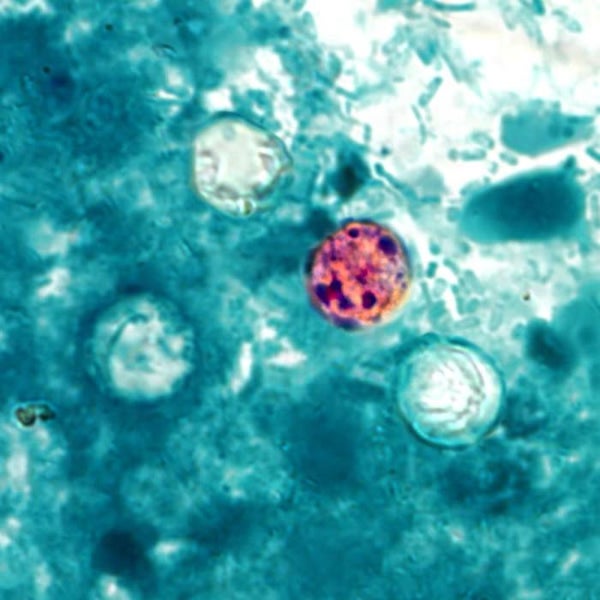
An outbreak of an explosive-diarrhea-causing parasite has been linked to shredded iceberg lettuce served at the popular Tex-Mex chain Taco Bell in five states, the U.S. Centers for Disease Control and Prevention announced.
The affected states are Indiana, Kentucky, Michigan, Ohio and West Virginia, the CDC said.
The CDC, the U.S. Food and Drug Administration and state public health officials have been investigating the outbreak’s source, which has so far sickened thousands of people. In Michigan, one of the worst-hit states, officials say there are at least 4,300 cases of cyclosporiasis, an illness caused by a parasite called Cyclospora cayetanensis. It spreads through food or water contaminated with feces. The investigation traced the outbreak back to a shredded lettuce supplier in Mexico. Currently, the CDC is working with the supplier to figure out if the affected lettuce was sent to places beyond Taco Bell.
On supporting science journalism
If you're enjoying this article, consider supporting our award-winning journalism by subscribing. By purchasing a subscription you are helping to ensure the future of impactful stories about the discoveries and ideas shaping our world today.
The CDC, which lags behind states in compiling case count data, has confirmed 1,644 cases and is investigating some 5,100 more. The agency has said its numbers are almost certainly an undercount of the true case numbers nationwide. There have been some 94 hospitalizations so far but no deaths. Cyclosporiasis symptoms include sudden, watery and occasionally explosive diarrhea—these symptoms usually appear between two days and two weeks after ingesting the parasite. The illness can last anywhere from a few days to a month or longer, according to the CDC.
“Do not eat shredded iceberg lettuce from Taco Bell locations in Indiana, Kentucky, Michigan, Ohio and West Virginia,” the CDC said in its announcement. “CDC is also investigating other outbreaks and illnesses of cyclosporiasis nationally that are unrelated to this outbreak.”
In a statement to Scientific American, Taco Bell said that it had “taken immediate action to voluntarily remove potentially impacted lettuce from a supplier in select states. The affected ingredient from our supplier is being indefinitely removed from our supply chain nationwide and will be replaced within 24 hours in select states.”
“While no official advisory has been issued, we believe public health is a shared responsibility among restaurants, their suppliers, and authorities, and we are proud to have consistently acted quickly and proactively to protect our guests. Taco Bell has taken precautionary action, and we encourage all relevant restaurants, retailers, and foodservice operators to do the same.”
To avoid contracting the illness, the best thing to do is to avoid eating lettuce, gastroenterologist Rabia de Latour told Scientific American recently. Importantly, washing leaves before you eat them is not enough to get rid of the parasite—that requires cooking food to at least 158 degrees Fahrenheit. The CDC also recommends that before people eat, cut or cook any fresh produce, they should wash their hands and the produce thoroughly.
Editor’s Note (7/17/26): This is a developing story and may be updated.