
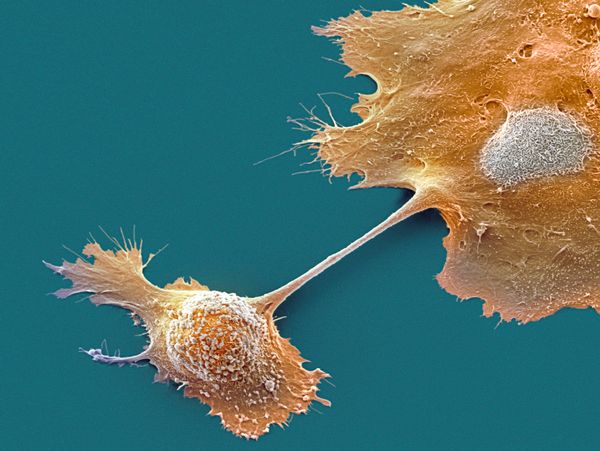
Pancreatic cancer is one of the deadliest forms of cancer—because it is so hard to detect, cases are typically caught in the late stages of the disease. A person can live with pancreatic cancer for years and not know because the early symptoms are so subtle as to be absent or negligible. There is no routine screening test, as there is for breast cancer or colon cancer, and most diagnoses happen only at advanced stages, when symptoms such as weight loss, abdominal pain and blood sugar problems become unignorable.
As a result, the five-year survival rate of pancreatic cancer is just 13 percent. A new blood test aims to change that. In results published today in Nature Medicine, scientists show how the blood test, called PANXEON, can accurately detect pancreatic cancer in its early stages and could even identify precancerous signs, enabling doctors to quickly intervene and treat the disease.
The results come on the heels of the U.S. Food and Drug Administration’s approval of a drug for pancreatic cancer called daraxonrasib. The medication is aimed at people with late-stage pancreatic cancer who have already been through chemotherapy. In a testament to the intractability of this form of cancer, the drug, which is hailed as a breakthrough treatment by experts, improves survival by just half a year compared with chemotherapy alone (with median survival of 13.2 months versus 6.7 months, respectively).
On supporting science journalism
If you're enjoying this article, consider supporting our award-winning journalism by subscribing. By purchasing a subscription you are helping to ensure the future of impactful stories about the discoveries and ideas shaping our world today.
About 1,800 people enrolled in an early-stage clinical trial to test the efficacy of PANXEON across the U.S., Europe and Asia. The test accurately detected stage 1 and 2 pancreatic cancers approximately 87 percent of the time, with a low rate of false positives. The blood test also identified advanced pancreatic dysplasia—the presence of a precancerous condition in the pancreas—more than 64 percent of the time in people with high-risk pancreatic cysts. Together, the results suggest the test could flag cancer earlier and offer opportunities for clinicians to intervene before the disease has had a chance to spread to other organs.
The blood test screens for three molecular signatures of pancreatic cancer. Researchers then use artificial intelligence to assign a risk score that measures individual risk of cancer. Doctors can use the score to determine whether more investigation or treatment is necessary, particularly in people who have inherited risk of pancreatic cancer or who have had pancreatitis, for example. More advanced clinical trials are needed before this blood test could possibly be used in the clinic, but the results are promising in a disease that is so difficult to manage.
“The earlier we find pancreatic cancer, the greater the chance that meaningful intervention is still possible,” said Ajay Goel, study senior author and chair of molecular diagnostics and experimental therapeutics at City of Hope, a cancer research and treatment organization headquartered in California, in a statement.