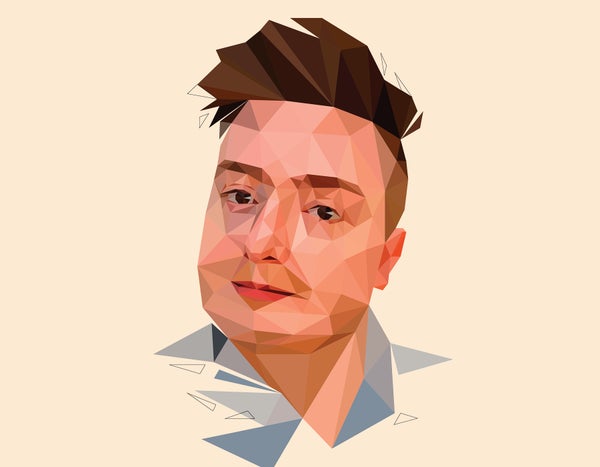
A hangover inspired Colin Carlson to meld climate change, public health and ecology. After a night out with a parasitologist, Carlson sat at brunch asking that friend whether parasites could—like so many of the organisms he worked with—go extinct from climate change. The two went on to conduct the largest study to date of parasite biodiversity, finding that up to one third of parasite species are at risk of extinction caused by climate change. Parasites fill important niches in ecosystems around the world, so the consequences of such a die-off could be catastrophic.
Carlson is now an assistant professor of epidemiology at Yale University, exploring the science and policy behind planetary health and running a National Science Foundation research project called Verena, in which he and his colleagues look for emerging viral threats. His mission is to help the world understand what future public health emergencies will look like and what we can do to mitigate them. He has testified in front of Congress on public health issues and advocated for increased investment in disease surveillance. The challenge, he says, is getting the people in power to act.
On supporting science journalism
If you're enjoying this article, consider supporting our award-winning journalism by subscribing. By purchasing a subscription you are helping to ensure the future of impactful stories about the discoveries and ideas shaping our world today.

Tony Luong
In a time of funding cuts, misinformation and public distrust of science, it’s a more formidable challenge than ever. At the moment Verena is in a “state of profound instability,” with departing staff members, concerns about censorship and uncertainty over lost federal funding. In his laboratory, Carlson keeps a Post-it note on his desk that says, “Time spent on research is never wasted.” He lives by it. “This is the hardest this job has ever been, and I say that kind of tongue in cheek because this job is hard,” Carlson says. “It is normally hard but rewarding. Right now it is mostly hard.”
This article is part of “The Young American Scientists,” an editorially independent project that was produced with financial support from Regeneron. Special thanks to the Museum of Science in Boston, where Carlson's portrait and video interview were captured.